
Global Silicon Council (GSC)/
ASEAN Regulatory Cooperation Platform (ARCP) Workshop 2025
24–26 September 2025
Manila, Philippines
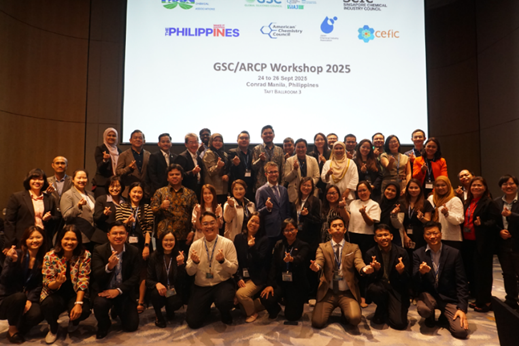
The joint Global Silicones Council (GSC)-ASEAN Regulatory Co-operation Platform (ARCP) workshop was successfully convened from 24 to 26 September at the Conrad Hotel in Manila, Philippines. Hosted by the Department of Trade and Industry (DTI) of the Philippines with the support of SPIK (Chemical Industries Association of the Philippines), the workshop brought together an over-whelming attendance of more than 60 in-person participants and 50 online participants, comprising industry and regulator representatives from ASEAN Member States (AMS) as well as international experts.
The three-day workshop focused on strengthening chemicals management capacity & capability across the AMS region, covering risk-based chemical assessment and management including several relevant case studies. The session also provided a platform where AMS regulators cross-shared development of regulatory frameworks and emerging areas of regulatory focus.
Day 1 & 2: Chemicals Assessment & Management with Case Studies
The workshop opened with remarks from Ms. Gretchen F. Enarle, President of SPIK and Mr Reynaldo D. Lignes of Department of Trade and Industry (DTI) - Board of Investments – Manufacturing Industries Service of Philippine Government. It was followed by a warm welcome from ARCP Co-Chairs Ms. Cissie Yeung and Mr. Fabien Henry, and Mr. Karluss Thomas, Executive Director of GSC.

The morning session of day-1 kicked-off with a segment on an exchange of updates on recent developments of chemicals management frameworks and requirements across the Asia-Pacific region including from Australia, Japan, Brunei, Cambodia, Indonesia, Laos, Malaysia, Philippines, Thailand, Singapore and Vietnam.

The workshop focused on risk-based chemicals assessment and management, with expert-led sessions on the following topics:
- Development of chemicals inventory, chemicals prioritization and systematic review
- Hazard & exposure evaluation and risk characterization
- Risk management
- Risk communication
- Risk assessment data sources, tools and guidance
- Exposure and safety estimation suite
- ARCP Chemical Risk Assessment guidance case study
Several interactive risk assessment case studies were selected to help deepen participants’ understanding of chemical safety and risk assessment on day-2 including:
- Chemicals Management case study led by Alex Rinehart (Shin-Etsu Silicones)
- Metals Risk Assessment by Kate Heim (NiPERA)
- Endocrine Activity Assessment by Ellen Mihaich (Duke University)
- POPs Assessment by Kathy Plotzke (Dow)
Special thanks to the speakers and support team including Kathy Plotzke (Dow), Kate Heim (NiPERA), Hien Q. Le (Chemours), Kristen Smith (Momentive Performance Materials), Bernard Lee (Chemistry Australia), Ellen Mihaich (Duke University), Jon Arnot (University of Toronto) and Alex Rinehart (Shin-Etsu Silicones)

Breakout discussions were also incorporated to explore further possible opportunities for ASEAN cooperation in areas such as Persistent Organic Pollutants (POPs) assessment and management as well as ASEAN collaboration in chemical risk assessment, with a focus on improving access to testing data and results. Participants exchanged their current practices, challenges and potential strategies for data sharing across the region. Insights garnered from the breakout will help to discuss further on having a Virtual Working Group (VWG) on Access to Testing Data for Chemical Risk Assessment to work on the feasibility of developing a regional chemical inventory or database. This is aimed at fostering aligned approaches and supporting regulatory decision-making across ASEAN Member States.
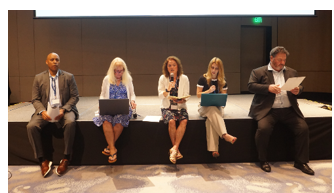
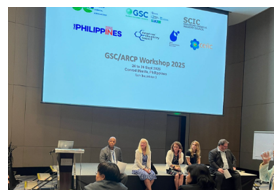
Day 3: ASEAN Regulatory Cooperation Platform (ARCP)
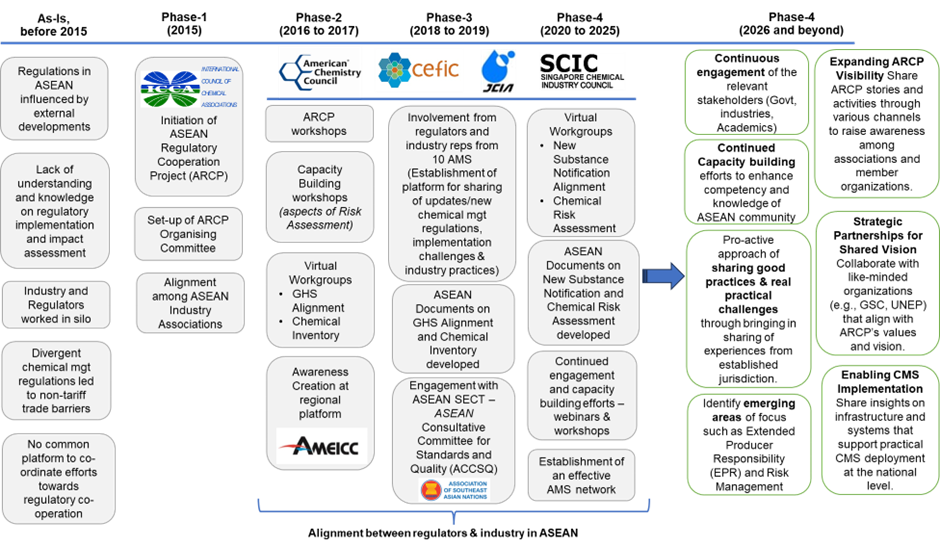
The final day of the workshop focused on ARCP’s efforts in fostering regulatory convergence and cooperation across ASEAN Member States (AMS). With 2025 marking the 10th anniversary of ARCP since its inception in 2015, it served as both a reflection on progress and a forward-looking focus on emerging regulatory priorities.
Introduction & updates on ARCP developments
ARCP Co-Chairs Ms. Cissie Yeung and Mr. Fabien Henry opened the session by commemorating ARCP’s decade-long journey. They highlighted key milestones, including the development of regional guidance documents, virtual workgroups, and collaborative platforms that have strengthened regulatory alignment. The presentation also outlined ARCP’s 2025 activities and its strategic direction for the coming years, emphasising continued support for AMS in enhancing chemical safety frameworks.
Updates on ASEAN Economic Community (AEC)
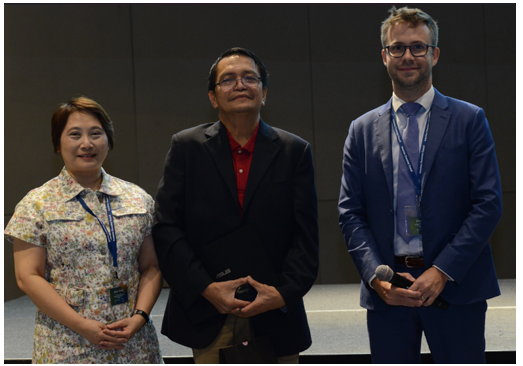
Updates on ASEAN Economic Community (AEC), Mr. Reynaldo D. Lignes, Acting Director, Board of Investments Philippines – Manufacturing Industries Service, presented key developments in the ASEAN Economic Community (AEC), marking 2025 as the final year of the AEC Blueprint 2025.
The AEC aims to create a single market and production base, supporting free flow of goods, services, investment, and labour.
Highlights included:
- ASEAN’s GDP reached USD 3.9 trillion with strong trade and investment growth.
- Upgrades to major trade agreements (ATIGA, AANZFTA, ACFTA 3.0) enhance regional integration.
- New initiatives in digital trade, circular economy and sustainability including ESG guidance for SMEs and transition finance tools.
- Strategic plans for 2026–2030 and ASEAN Vision 2045 which emphasized on resilience, innovation and inclusive growth.
These updates reinforce ASEAN’s commitment to deeper economic integration and regulatory cooperation.
Trade Panel Discussion
Ms. Lisa Schroeter (ICCA) and Mr. Jason Bernstein (American Chemistry Council) led a dynamic panel discussion on the global and regional trade landscape. They explored how regulatory convergence can reduce trade barriers, enhance market access and support sustainable development. The dialogue also touched on the importance of science-based regulations and mutual recognition principles in fostering trust and cooperation among AMS.

The Global Framework on Chemicals: Supporting Chemical Safety for a Planet Free of Harm from Chemicals and Waste
Mr Tapiwa Nxele (UNEP) presented the Global Framework on Chemicals (GFC), covering the following:
- Outline of the 5 strategic objectives including governance, knowledge, issues of concern, safer solutions and enabling mechanisms.
- Multistakeholder collaboration across governments, industry and society.
- Availability of UNEP-administered fund supporting national projects. AMS may contact Mr Tapi via
This email address is being protected from spambots. You need JavaScript enabled to view it. for more information
The GFC supports ASEAN’s regulatory goals by promoting safer alternatives, strengthening risk management and aligning national policies with global standards.

ICCA 30x30 Ambition
Ms. Teoh Sue May introduced ICCA’s 30x30 ambition, a global initiative aligned with the Global Framework on Chemicals (GFC). By 2030, ICCA aims to:
- Support 30 countries in implementing effective chemical management systems.
- Promote transparency by providing access to safety and sustainability data.
- Advance sustainability through product portfolio improvements.
The initiative builds on existing efforts like ARCP and Responsible Care, with targeted funding availability to promote capacity building and guidance development. AMS may contact ARCP via
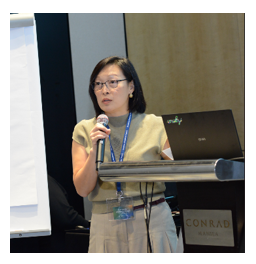
Regulatory Dialogue Sessions
One key highlight of Day 3 was the Regulatory Sharing Session, where representatives from the AMS shared updates on national regulatory developments and emerging priorities in areas such as:
- Extended Producer Responsibility (EPR)
- Import declaration procedures
- Circular economy initiatives
- Waste management and recycling
- Low-carbon transition and decarbonization strategies
This facilitated dialogue fostered mutual learning and provided a platform for AMS to exchange good practices, challenges and forward plans. It also helped identify areas for deeper cooperation and regulatory support.
New Substance Notification (NSN)
The ARCP NSN Virtual Workgroup (VWG) shared progress on the development of the ASEAN Guidance Document on New Substance Notification, covering:
- Definitions, scope and exclusions
- Notification scheme and inventory listing
- Polymer treatment, post-notification processes and CBI handling
- Best practices for safe use and evaluation
Breakout discussions further explored barriers and opportunities for harmonization. Key discussions included mutual acceptance of notifications among AMS, risk assessment requirements and inventory listing periods.
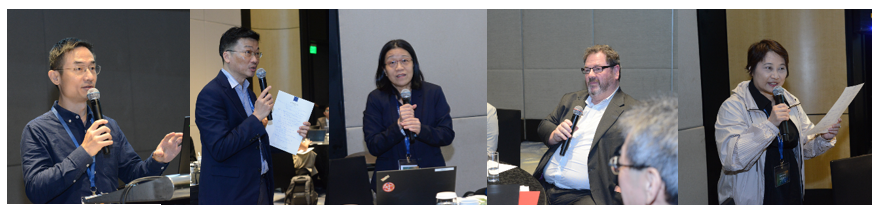
Globally Harmonised System (GHS)
The ARCP GHS Virtual Working Group (VWG) presented updates on the ASEAN-7+ Guidance Document on GHS Implementation Alignment, which promotes convergence across ASEAN Member States. Key highlights included
- Adoption of the building blocks approach to allow flexibility in hazard classification.
- Use of Mutual Acceptance Principles to facilitate recognition of GHS revisions across AMS.
- Country panel sharing on operationalising GHS revisions including best practices and challenges by:
- Malaysia – presented by Mr Muhamad Amirul Luttfi Mohamad Amir, Division of Chemical Management, Department of Occupational Safety and Health
- Indonesia – presented by Mr Yogi Hendra Agustion, Sub-Directorate of Upstream Chemical Industry, Ministry of Industry
- Singapore – presented by Ms Cissie Yeung, Convenor of previous SS586 workgroup, Singapore Chemical Industry Council (SCIC)
- GHS regulatory developments in Japan as shared by Mr Nishimura of JCIA.
Mr Muhamad Amirul further shared Malaysia’s SDS Assessment Checklist as a practical tool to improve SDS compliance and enforcement.

Exploring New Work Items: Extended Producer Responsibility (EPR) & Risk Management (RM)
To conclude the day, the workshop explored two emerging workstreams for ARCP:
- Extended Producer Responsibility (EPR) – Ms. Janet Marcellana (Shell Philippines) first provided an industry perspective on EPR, emphasizing its role in promoting circularity and sustainable waste management.
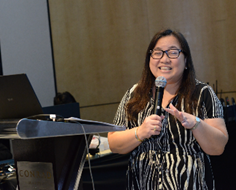
- Risk Management (RM) – Mr. Fabien Henry introduced foundational concepts and potential approaches for regional collaboration on RM.
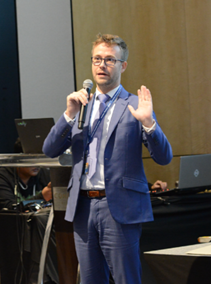
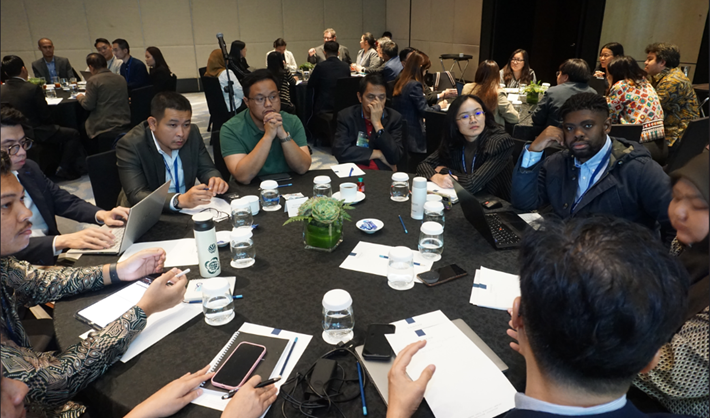
Participants then broke into group discussions to solicit inputs from AMS on these topics. The valuable insights generated from the breakout sessions will help shape the direction of future ARCP initiatives.
Fostering trust and collaboration
During the 3-days workshop, side meetings were held with regulators from the Philippines, Vietnam, and Thailand. These discussions provided a valuable opportunity to exchange views on industry concerns and explore practical solutions to operational challenges arising from regulatory requirements. These have helped to enhance mutual understanding and foster collaborative working relationships.

The networking dinner and reception served as an effective ice-breaker, allowing participants to connect informally, build rapport and expand their professional networks in a relaxed setting.

Looking Ahead
The workshop received overwhelmingly positive feedback, with participants expressing strong interest in attending future sessions. Many of them emphasized the value of the content and proposed additional topics for future inclusion, reflecting a strong desire for continued learning and engagement. These insights will serve as relevant inputs to help shape future ARCP workshops to better align with participants needs and deliver more impactful outcomes.
The Global Silicones Council (GSC) reaffirmed its strong support for ongoing collaboration, recognising the synergy and significance of this impactful joint initiative in advancing regional chemical safety and regulatory alignment.
ARCP remains dedicated to supporting ASEAN’s collective efforts in chemical safety and regulatory alignment, with continued involvement and active participations from all ASEAN Member States.
Contributed by:
ARCP Organising Committee
Disclaimer
The article published is for circulation by ICCA for its members only. It should not be disseminated beyond the intended circulation.
